Resources / Licensed venues
Why Great Atmosphere Isn’t Enough in 2026
Venues have invested heavily in music, lighting, and atmosphere. One foundational factor overrides all of it when it’s missing: a phone with enough charge.

Think about what you’ve invested in the patron experience at your venue.
The playlist is carefully considered, the lighting sets the right mood, the fit-out is comfortable, and the service is good. You’ve done the work.
And then a patron checks their phone, sees 14% battery, and quietly starts thinking about when they need to leave.
None of what you’ve invested in matters in that moment. The experience has been overridden by something you probably haven’t thought of as part of the experience design.
Guest Experience Is Layered
Guest experience operates in layers, and the layers have to be satisfied from the bottom up.
The bottom layer is the basics, the things that have to work before anything else matters: temperature, cleanliness, safety. In 2026, a patron’s phone having enough charge to function is part of this layer too.
The middle layer is atmosphere: music, lighting, comfort, the sensory environment you’ve worked hard to create. When this layer works well, patrons relax, stay longer, and remember the experience positively.
The top layer is excellence: exceptional service, personalisation, standout food and beverage. When venues get this right, they create loyalty and word-of-mouth.
Each layer only works if the one below it is solid. You can have a perfect atmosphere, but if the basics aren’t covered, it doesn’t matter. The best service in the world can’t compensate for a patron who’s anxious and distracted.
Battery anxiety sits at the bottom layer, and it’s now one of the most common reasons that layer fails.
This applies even if you have USB charging at the bar or power strips under tables. Wired charging is better than nothing, but it pulls patrons from their seat and leaves them managing a cable for the rest of their visit. It solves the power problem without solving the experience problem.
Why a Dying Phone Is Now a Foundational Problem
Ten years ago, a low phone battery was an inconvenience. Today it’s a functional issue.
When a patron’s phone hits a critical level, they face practical problems. For the 38% of Australians who left their physical wallet at home in 2022, up from 19% in 2019 (Australian Banking Association, 2023), a dead phone means they can’t pay. For the patrons relying on QR code ordering, it means they can’t order the next round. For almost everyone leaving at night, it means they can’t call a rideshare home.
A dead phone means the visit has to end.
The average person starts to worry at 38% battery, and only about a third stay calm once it drops below 20% (Talker Research, 2025). That anxiety overrides a relaxed, enjoyable visit. The atmosphere you’ve created stops working the moment a patron shifts into “when do I need to leave?” mode.
The 15% of patrons who have left venues early due to a dead battery (Chargifi, via Morning Advertiser, 2019) did so because the foundation failed, and nothing else in the experience could compensate for it.
When the Foundation Is Right, Everything Else Works Better
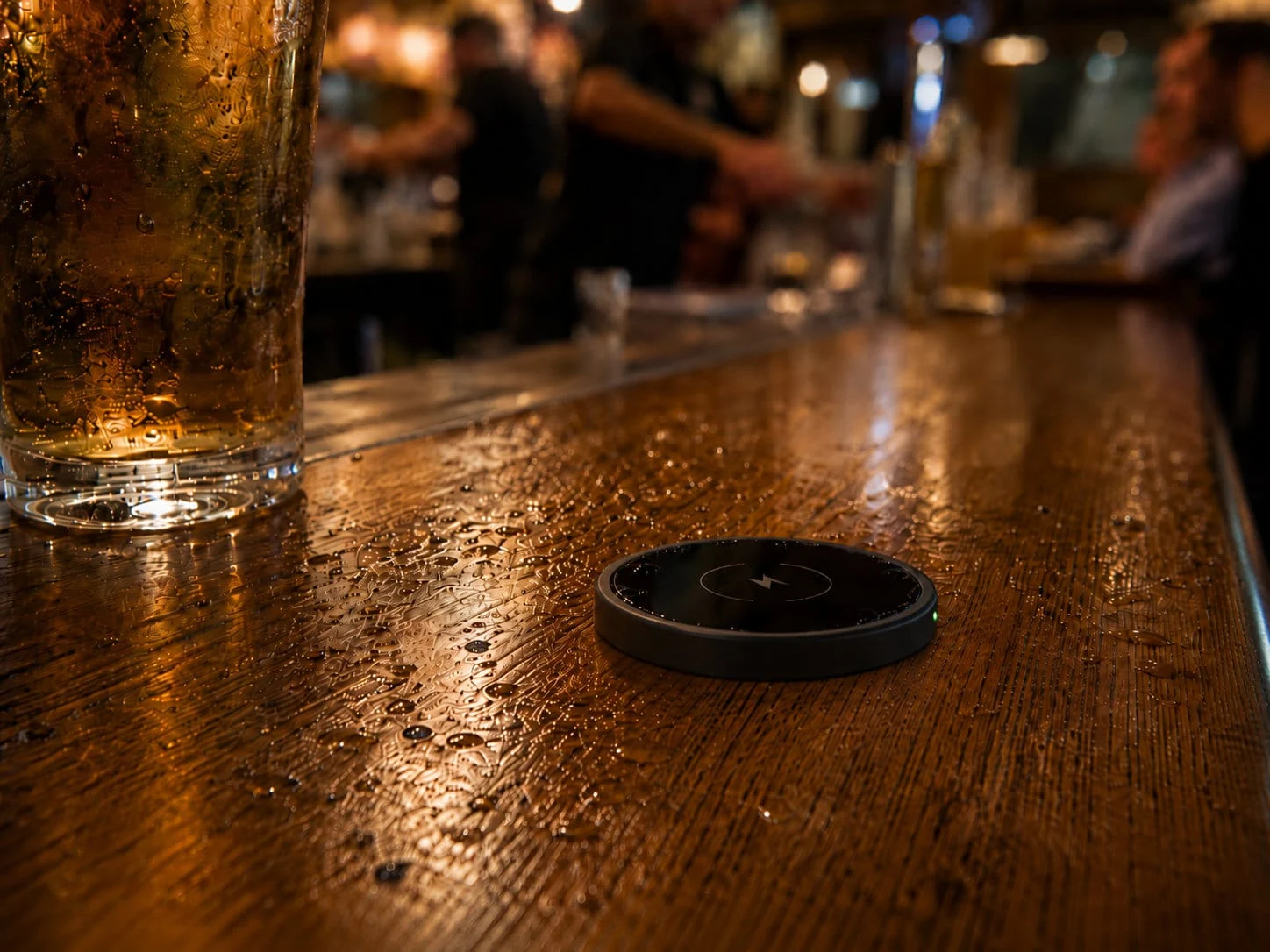
A patron who sits down, notices the wireless charger at their seat, and places their phone down isn’t thinking “great, this venue is well-designed.” They’re just not thinking about their battery anymore. That low-level anxiety never gets triggered.
They settle in, take in the atmosphere you’ve created, order another round, and stay for the next session. They leave with a positive memory of a venue that felt easy to be at, without being able to say why.
46% of patrons would spend more time at venues offering charging (Chargifi, via Morning Advertiser, 2019). Small amenities can help lift review scores, the kind of moments that tip a 4-star venue toward 5.
The venues doing this well include Club Blacktown and Mollymook Golf Course (2024 NSW Country Club of the Year). Over 300 Australian businesses have made this part of their experience infrastructure. The feedback is consistent: patrons stay longer, staff field fewer interruptions, and the venue signals that it has thought about the patron’s experience without saying a word.
The Question Worth Asking
You’ve invested in atmosphere and worked on service to build something worth visiting.
Is the foundation solid enough to let all of that work?
If you want to see what the investment looks like for your venue (conservative ROI model, real venue data), download the free business case below.
Common questions
Isn’t atmosphere more important than whether a phone is charged?
Atmosphere only works once the basics are covered. Guest experience operates in layers, and battery anxiety sits in the foundational layer. When the foundation fails, the atmosphere you have invested in stops landing.
We already have USB points at the bar. Isn’t that enough?
Wired charging solves the power problem but not the experience problem. It pulls a patron out of their seat and leaves them managing a cable for the rest of the visit, which is the opposite of settling in.
How many venues are doing this?
Over 300 Australian businesses have made wireless charging part of their experience infrastructure, including Club Blacktown and Mollymook Golf Course.
Written by Ryan Britz, Director at Stay Charged. Stay Charged has supplied commercial wireless charging to 300+ Australian businesses since 2017, with 15,000+ chargers installed. Australian-owned, Queensland-based, with RCM-marked, AS/NZS-compliant commercial hardware.