Resources / Licensed venues
WiFi Became Infrastructure. Wireless Charging Is Next.
The phone now carries payment, ordering, and the ride home, and battery is the bottleneck that takes it all offline. Wireless charging is where WiFi sat in 2010.

WiFi won because it kept patrons connected to the things that mattered while they were in your venue: the map home, the message to the table running late, and later the loyalty app, the mobile payment and the QR menu. Once those things lived on the phone, a venue without WiFi was cut off from how people behaved.
Wireless charging is the same call, arriving a decade later. The difference is that the bottleneck has moved. In 2010 the constraint was data. In 2026 the constraint is battery. And almost everything that connects a patron to your venue now runs through a phone that has to stay alive to work.
TL;DR
- WiFi became venue infrastructure because the phone now carries everything that matters to a patron. Battery is the new bottleneck that takes all of it offline.
- The phone is load-bearing: 44% of in-person payments in Australia run through a mobile wallet, on top of ordering, loyalty, and the ride home.
- Patrons who hit low battery do not complain. 15% have left a venue early over a dead phone, and most never say why.
- Wireless charging in 2026 sits where WiFi sat in 2010: a differentiator now, an expectation soon. The gap is still open.
- The economics are conservative and owned, not rented. A medium venue protects around $1,144 a month at a 2% patron impact, with payback in about 7.7 months.
The phone quietly became your venue’s infrastructure
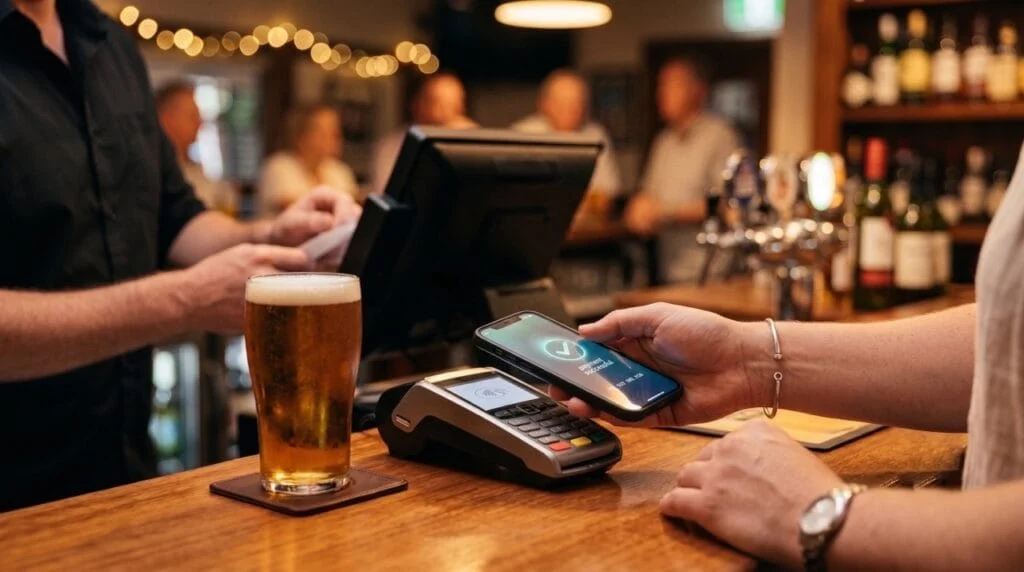
Look at what a patron’s phone is actually doing on a Friday night. It is the payment method: 44% of in-person transactions in Australia are now made through a mobile wallet (Reserve Bank of Australia, October 2024), and 38% of Australians left home without a physical wallet at all in 2022 (Australian Banking Association, 2023). It is the menu, the loyalty card, the booking confirmation, and the way the group finds each other across a busy room.
None of that works on a dead phone. When the battery hits the red zone, your venue loses the patron’s payment method, their ordering, and their reason to stay, one table at a time, for the rest of the night. The infrastructure you have already invested in goes offline, and it never shows up in your reporting.
Why the patrons you lose never tell you
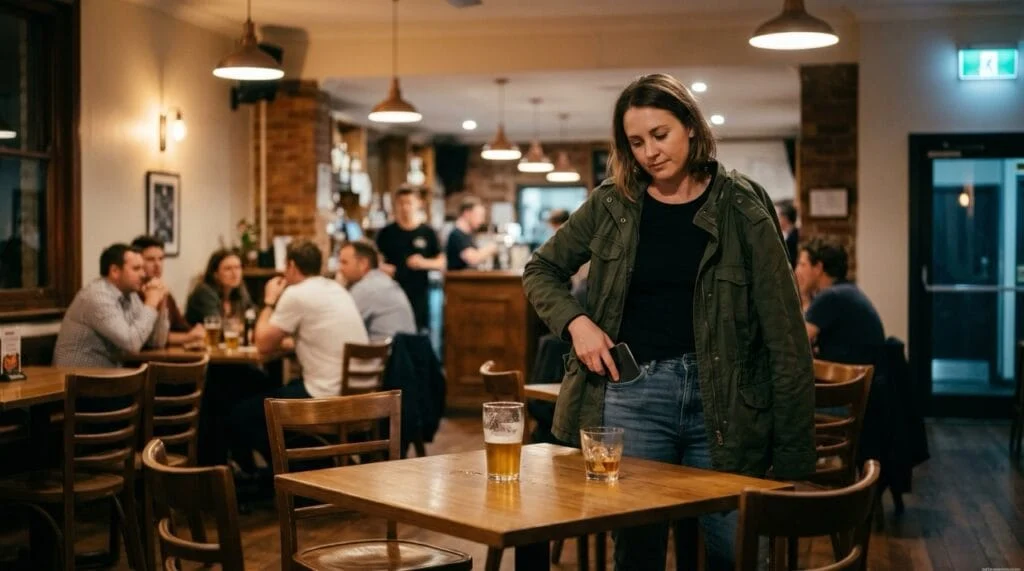
15% of patrons have left a venue early because their phone battery died (Chargifi, via Morning Advertiser, 2019). They do not complain, and they do not ask for a charger. They gather their things and go, and you never learn why visit frequency slipped.
The damage starts before they leave. For the 3 in 5 Australians who feel a jolt of panic when the low-battery alert appears and there is no power in reach (Qualcomm / MyMavins, December 2025), attention shifts away from the evening and toward logistics. Can I pay? How do I get home? What if someone needs to reach me? More than half of all smartphones are running low by 5pm (Chargifi), which is precisely when evening trade begins. A distracted patron makes for a shorter visit, and a shorter visit means a smaller night, recorded nowhere.
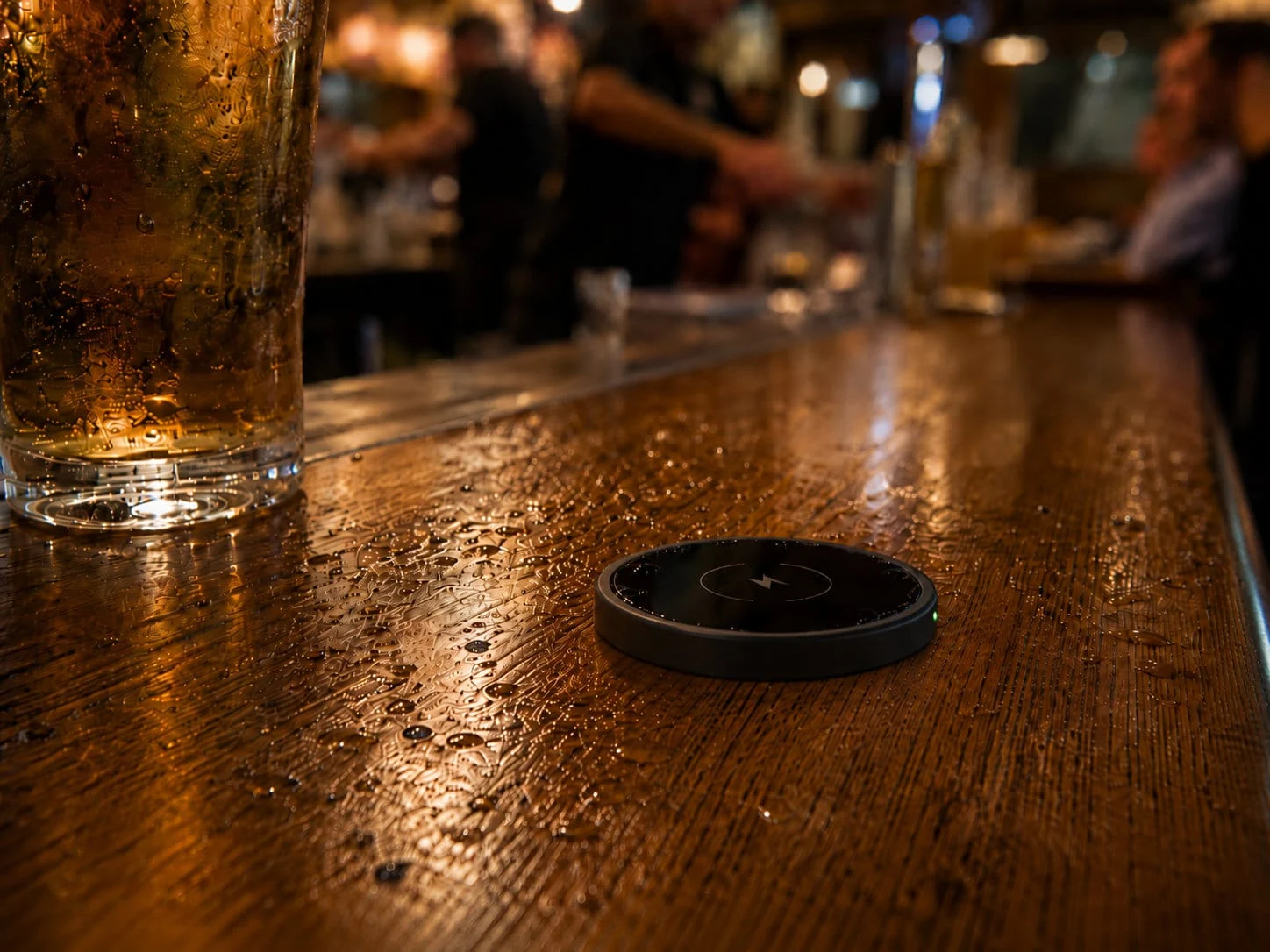
The moment a patron places their phone on a charger in the table, that background anxiety switches off. They stop calculating their exit and start being present. They order the next round and stay for the next act. And when they leave, on their own terms with a charged phone, they leave thinking the venue thought of everything. That thought is what brings them back, and 46% of patrons say they would spend more time at a venue that offers charging (Chargifi, via Morning Advertiser, 2019).
The same trajectory, one step behind
Free WiFi followed a clean curve. In 2010 it was a differentiator, and the venues that moved early owned the modern-venue reputation while it still meant something. By 2015 patrons expected it. By 2020 nobody mentioned it, because it was simply there. The venues that waited did not avoid the cost. They just paid it later, with none of the positioning upside.
Wireless charging in 2026 sits where WiFi sat in 2010. The phone has become essential for payment, ordering, navigation, and safety, not just for leisure, and battery is the constraint nobody has solved at the table yet. There is still a real gap between the venues that have closed it and the ones that have not.
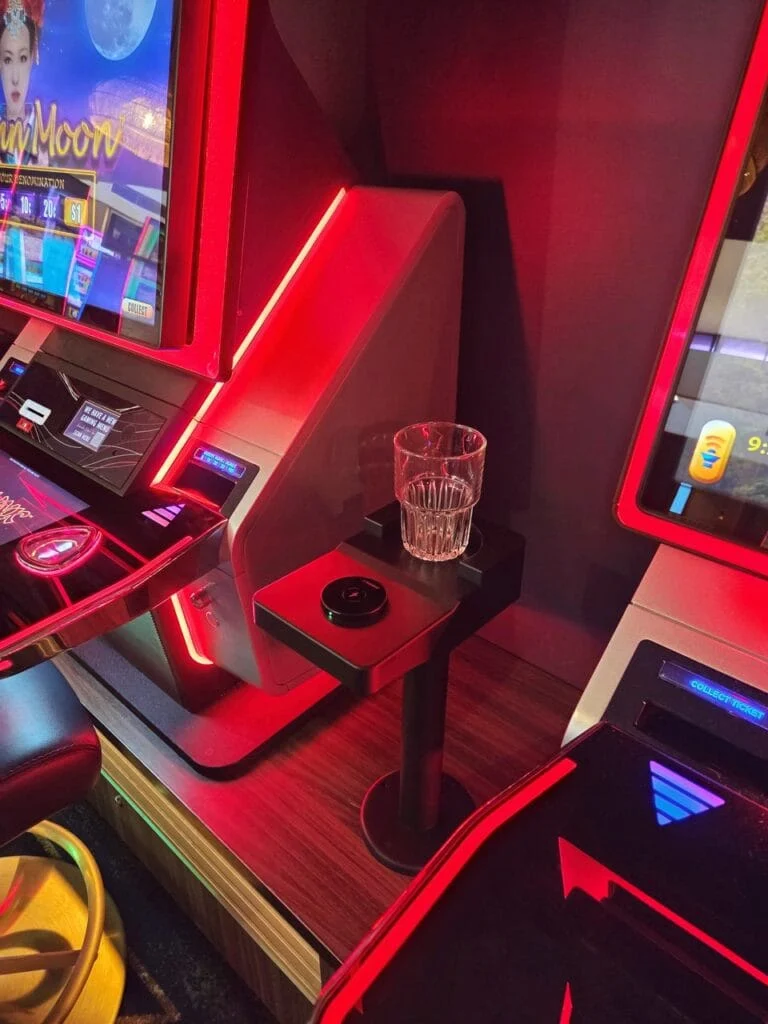
It is already working in Australian venues
More than 300 Australian businesses have installed Stay Charged across more than 15,000 chargers since 2017, from suburban clubs to award winners like Mollymook Golf Course, the 2024 NSW Country Club of the Year. The feedback is consistent. “At first people thought it was a bar coaster, but when they learn they can charge their phone they love the idea and actually stay longer within the premises,” says Mark Warren, Director of the Gumeracha Hotel. From Club Blacktown, Technology Manager Ethan Dean reports that “the peace of mind that comes with knowing their devices are safely charging next to them has been a huge win for our patrons.”
If you want to see how this looks across a full venue, from the patron experience to the hardware and the compliance approvals, we put the complete picture together on our venue and hospitality charging page. It walks through where the chargers go, how the SwiftPro 25W and ChargeHUB 25W units perform, and the safety standards behind them.
The number your CFO will ask for
The patron experience is the reason to act. The economics are the reason it is easy to approve.
The investment is modest and it is owned, not rented. Supply runs to $126 per SwiftPro 25W unit and $363 per ChargeHUB 25W unit (ex-GST, which venues claim back), so a typical mid-sized venue is looking at a low five-figure fit-out rather than an ongoing commission split with a kiosk operator. On a deliberately conservative assumption of just 2% of patrons affected on peak nights, a medium venue protects and generates around $1,144 per month and reaches payback in roughly 7.7 months. Many venues see a 3 to 5% impact, which lifts that toward $2,860 per month and shortens the payback considerably. Results vary by venue size and patron volume. After that, the infrastructure is on your balance sheet and the return compounds. You can run your own venue’s numbers on the published ROI calculator at staycharged.com.au, with your patron counts and your trading nights.
That is the structural advantage of owned infrastructure over a rental kiosk: no commission on every charge, no third-party dependency, and no risk of a provider exiting the market and taking your amenity with them.
Close the gap while it is still a gap
WiFi stopped being a differentiator the moment everyone had it. Wireless charging has not reached that point. The venues that move now will hold the modern-venue positioning while it still earns loyalty, the same way the early WiFi adopters did for a decade.
If you want the full case in a form you can take to a board or a partner, we have packaged it. The Business Case covers the patron behaviour and the revenue logic, the Finance One-Pager gives your accountant the numbers on a single page, and the Implementation Guide shows exactly how a rollout works.
Get the free business case. All three documents, no sales calls.