Resources / Offices
Workplace Charging Stations: What Employees Expect and What Offices Should Install
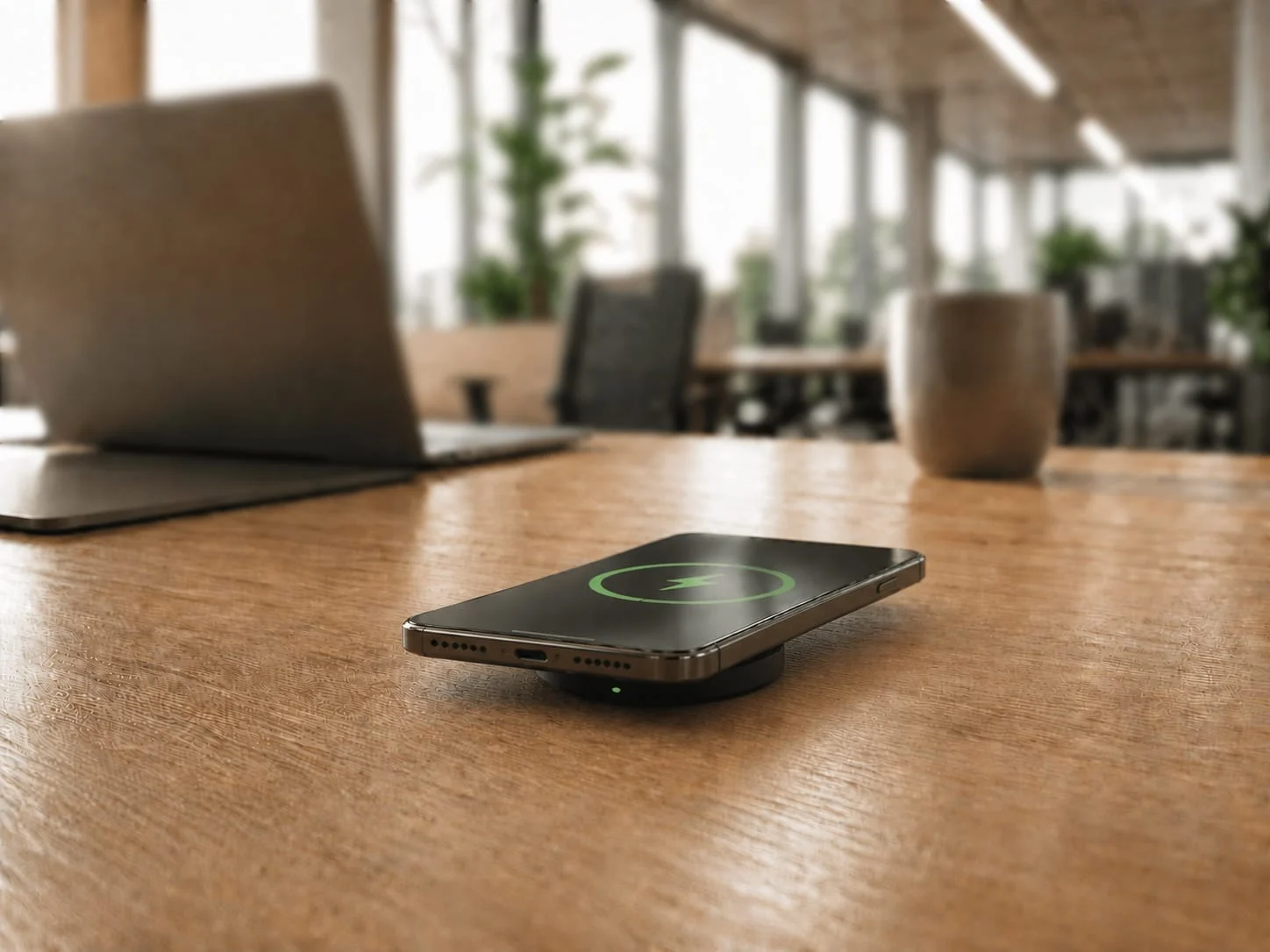
Employees expect charging to work like WiFi, free and wherever they happen to sit. A tower in the corner makes them get up and walk over, which is the friction to remove.
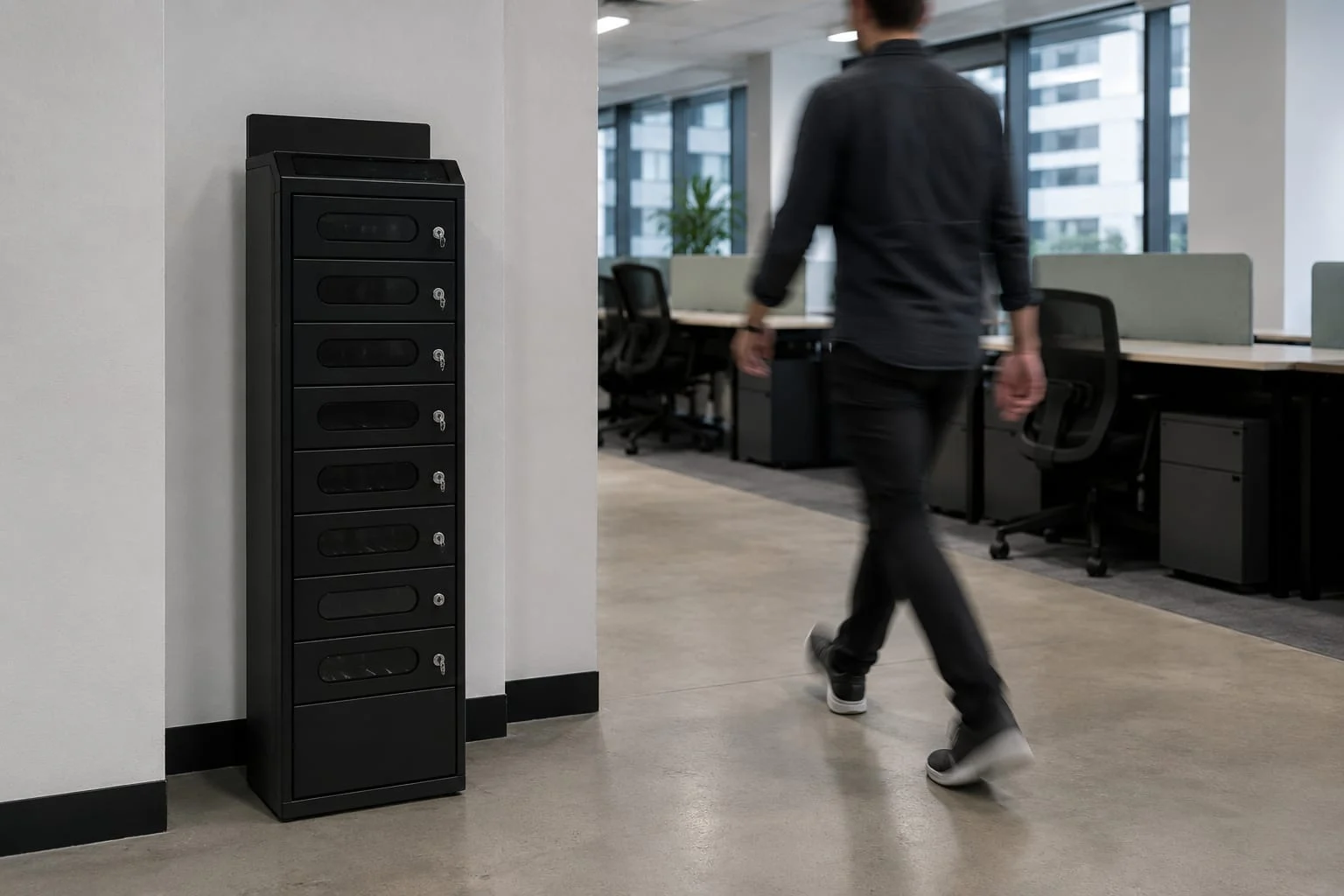
The short version: workplace charging stations are worth installing, but the freestanding tower in the corner is the wrong version. Employees expect to stay charged at the desk, not queue at a kiosk.
- Employees increasingly treat reliable charging as a baseline, the way they treat WiFi, not as a perk.
- A communal charging tower or locker makes people leave their seat, which is the opposite of useful.
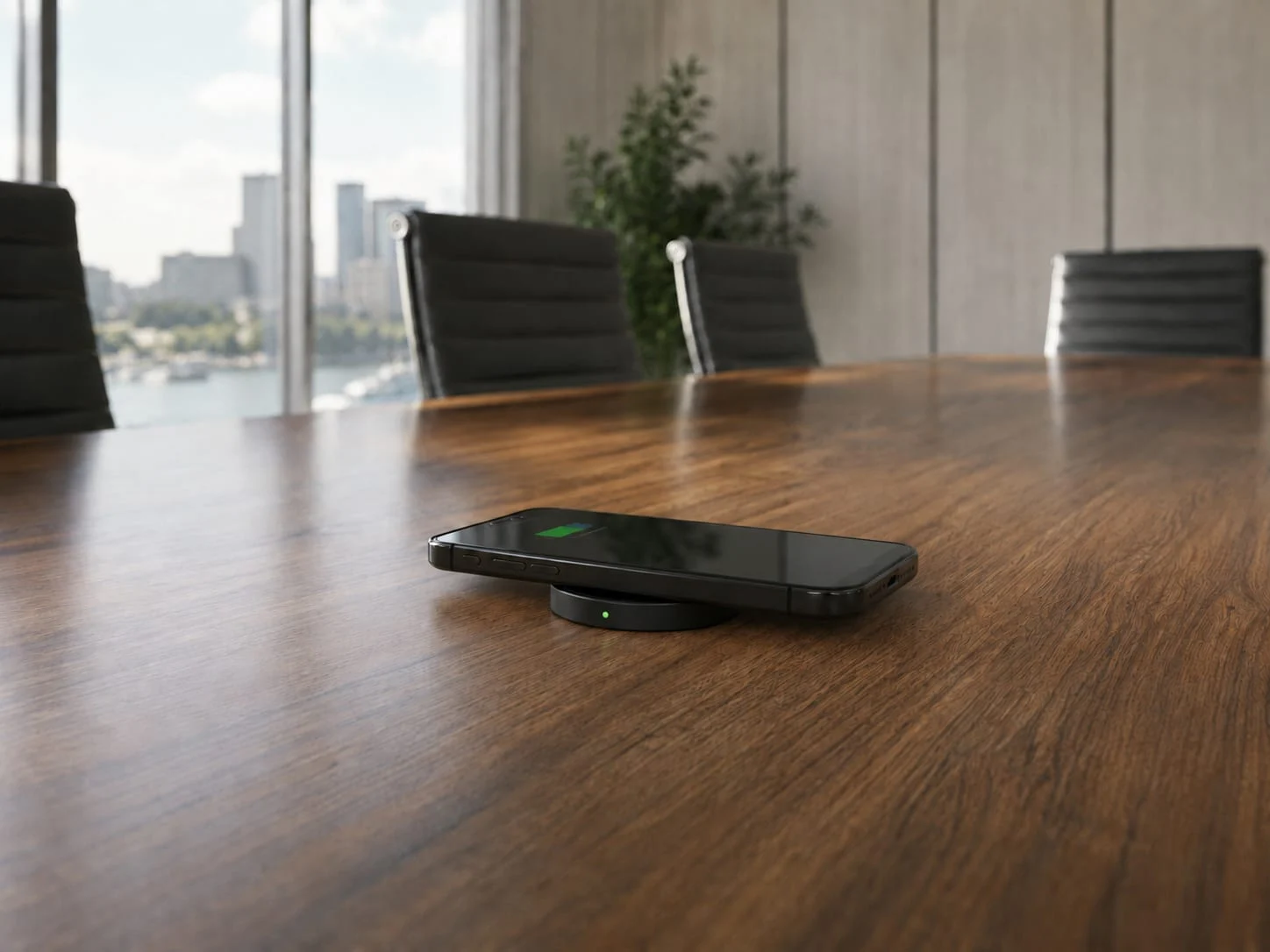
- The right install is built-in wireless charging at the point of use: desks, meeting tables, reception.
- It is an experience and retention decision, not a revenue machine, and the running cost is low.
When offices decide to “do something about charging,” the first idea is usually a station: a freestanding tower with a tangle of cables, or a locker of power banks parked near reception. It feels like the obvious answer. It is also the version most likely to go unused.
The format is the problem. The office has to earn the commute now, and JLL’s research found nearly 40% of employees think their office experience could be better. Charging is one of the small, constant things that shapes that judgement. Getting the format wrong wastes the spend and the goodwill.
What do employees actually expect from workplace charging stations?
They expect to stay charged without thinking about it. The benchmark is WiFi, which is free and works wherever you sit. Younger employees in particular treat charging as a baseline utility rather than a perk, because they have never worked anywhere their phone was not central to the day.
That phone now runs the working day end to end: logins, calendar, messaging, building access, desk booking. A flat battery locks an employee out of the tools the office runs on. From workplace charging stations, employees want their device topped up where they already are, with nothing to carry and no queue.
Why are consumer charging stations the wrong fit for an office?
Because they make people move, and they do not last. A communal tower or a power-bank locker asks the employee to get up, walk over, leave their phone with strangers or carry a borrowed bank back, and remember to return it. Every one of those steps is friction, and friction is what an office is trying to remove.
The hardware is the other half of the problem. Consumer-grade stations are built for light, occasional use, not for a device cycling through them all day, every day. They run slowly, the cables get damaged or walk off, and the unit is dead within months. A station that is unreliable or inconvenient trains people to ignore it.
The shift that makes this matter
The reason the desk-side answer wins is that the desk is no longer personal. Across the Asia-Pacific region, CBRE research points to desk sharing becoming steadily more common, as a growing share of companies move away from a dedicated desk for every employee. Nobody leaves their own charger at a desk they will not have tomorrow.
So charging cannot depend on the employee bringing anything, and it cannot live in one corner of the floor. It has to belong to the furniture people actually use, wherever they happen to sit. This is the office wireless charging decision in miniature, and it gets sharper still on a hot-desk or coworking floor where the occupant changes every day.
What should an office install instead?
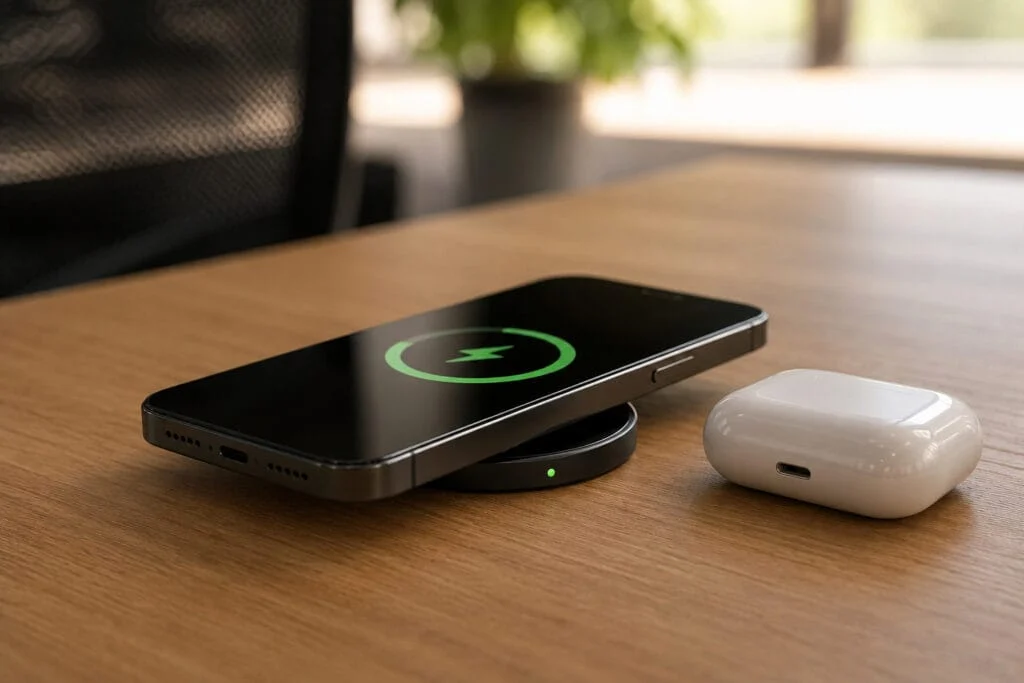
Install charging at the point of use, built into the surfaces people already sit at. The unit of deployment is one charging point per seat, integrated into desks, meeting tables, and reception.
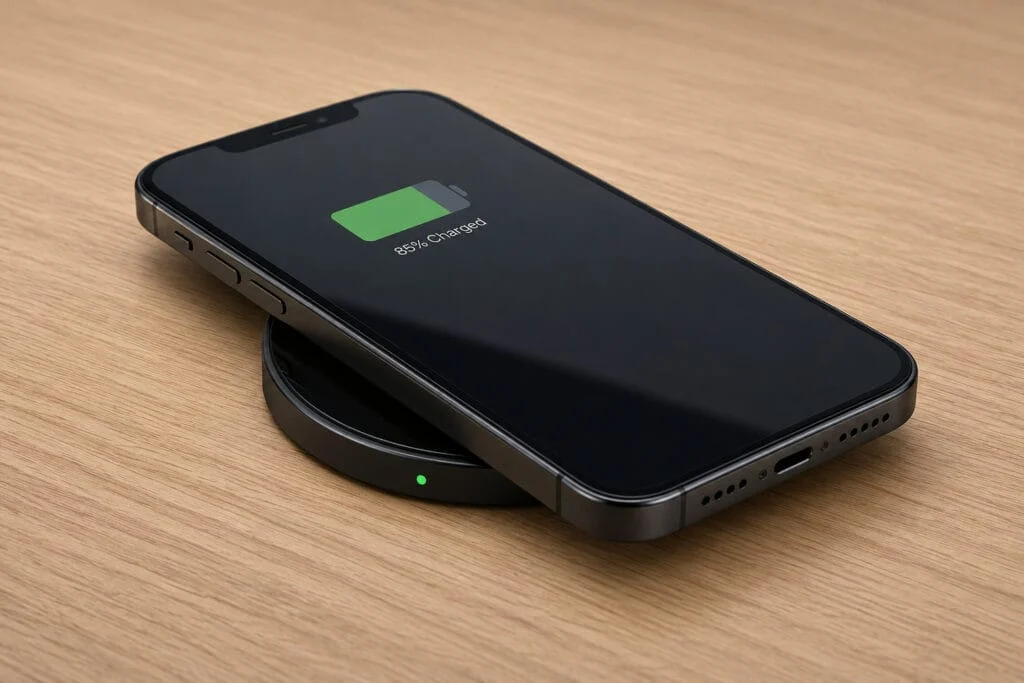
Wireless is what makes this practical. A single Qi charging point is device-agnostic, so it serves any phone across Apple and Android, and a multi-device workforce gets the same result at every seat without a drawer of cables. That is the difference between a charging hub that people rely on and a station they walk past. Built in, it also removes the cable clutter that a tower adds back.
Is wireless charging reliable enough for shared workplace use?
It is, provided you specify commercial-grade and the right speed. Wireless charging works by induction on the Qi standard, maintained by the Wireless Power Consortium, so one point charges any modern phone through the surface.
Two things separate a unit that holds up from one that does not. Speed: older pads run at 5W to 15W and barely move a battery, while a unit that meets Qi 2.2 MPP standards at 25W, with magnetic alignment, returns enough to matter in a normal sitting. Our Qi2 charging explainer covers the standards. Durability: a commercial unit is rated for the daily shared use a workplace demands, where a consumer pad is not.
The cost question for facilities managers
This is not a revenue machine, and it should not be sold as one. The return on workplace charging is experience and retention: a small, repeated signal that the building is on the employee’s side, in exactly the area employees say they want improved.
The running cost is low. A purpose-built unit like the SwiftPro 25W is $139, fits through a single 15mm hole, fastens from below, and needs no electrician to install. It carries a 24-month commercial warranty and charges current iPhones at up to 25W and other Qi devices at up to 15W. Specified into the furniture across the floor, workplace charging behaves like every other piece of building infrastructure, and nobody thinks about it until they need it.
Frequently asked questions
Why is built-in charging better than a freestanding charging tower?
A freestanding tower or power-bank locker makes employees leave their seat, queue, and remember to return what they borrowed. Every step is friction, which is what an office is trying to remove. Built-in charging at the desk lets people top up where they already sit, with nothing to carry.
Does built-in wireless charging work with all phones?
Yes. It uses induction on the Qi standard maintained by the Wireless Power Consortium, so a single point charges any modern phone across Apple and Android through the surface. A multi-device workforce gets the same result at every seat without a drawer of cables.
How does the SwiftPro install, and do I need an electrician?
The SwiftPro 25W fits through a single 15mm hole and fastens from below, so it needs no electrician to install. It sits about 7.5mm proud of the surface rather than disappearing into it, which keeps the unit serviceable while staying low and clean on the desk.
Which Qi version and speed does it support?
The SwiftPro 25W meets Qi 2.2 MPP standards with magnetic alignment. It charges current iPhones at up to 25W and other Qi devices at up to 15W, which is enough to return real charge in a normal sitting, unlike older 5W to 15W pads that barely move a battery.
Is it durable enough for shared, all-day workplace use, and what does it cost?
It is rated for the daily shared use a workplace demands, where a consumer pad is not, and it carries a 24-month commercial warranty. It is RCM marked and AS/NZS compliant. At $139 including GST per point with low running costs, the case is experience and retention rather than revenue.
Working out what to install? Stay Charged supplies commercial wireless charging built for Australian workplaces, integrated at the desk rather than parked in a corner. Book a free consultation to scope the right units for your office.